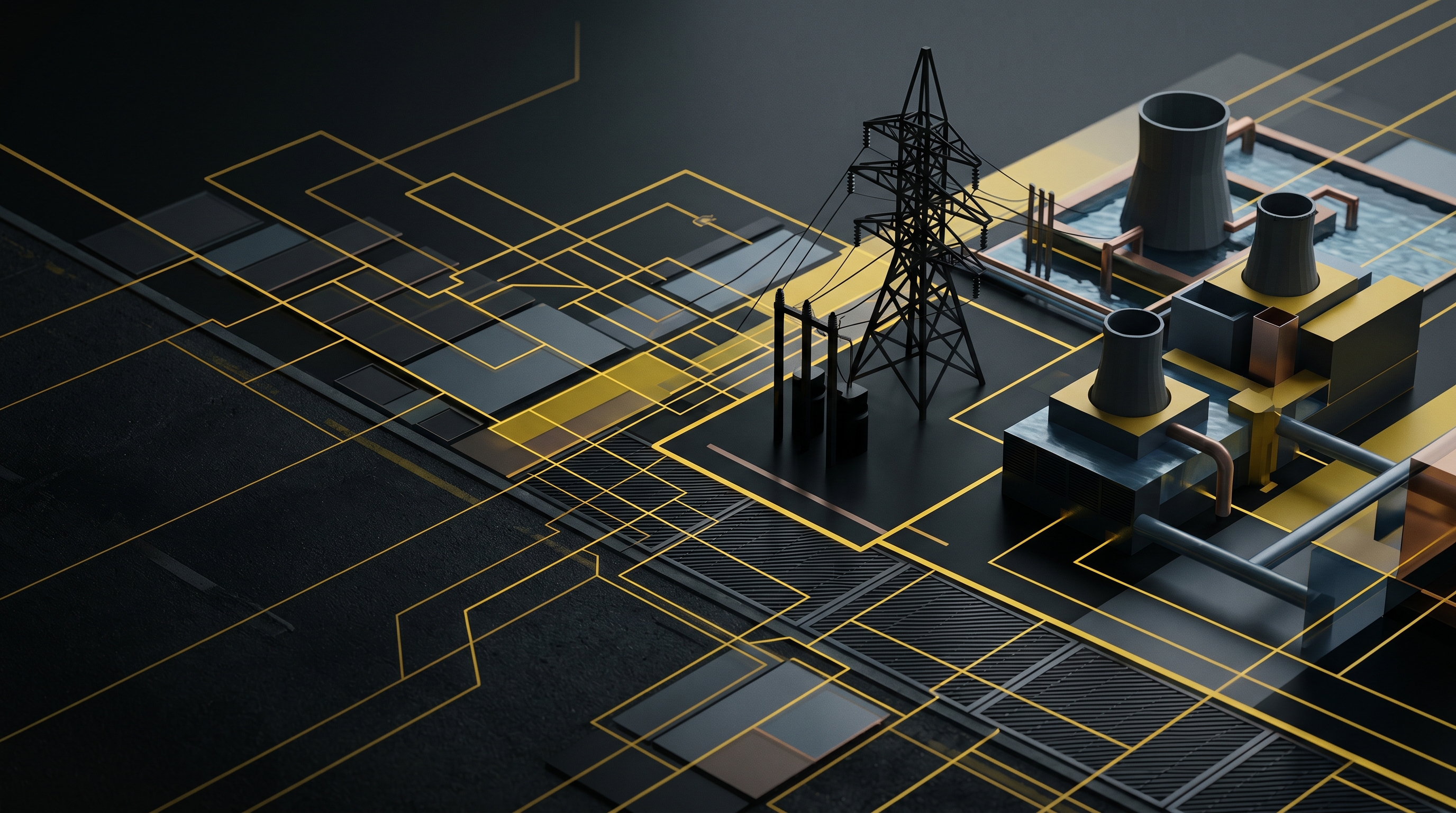
Chevron and Microsoft make the day's strongest data-center item: capacity now has to be priced in power contracts, not just chips. Same-day stories on water, financing, and local resistance push the planning problem into permits and credit markets too.
Read source◆ Braid Daily · 2026-06-22
AI buildout hits power, water, debt, and permits
Power contracts, water claims, debt financing, and local backlash now set the pace for data-center capacity.
The lead
1Infrastructure constraints
3Nvidia pitches a data-center water fix
Axios
Read this as Nvidia's claim, not a settled answer. Water has joined the data-center sales cycle because permitting fights now affect AI capacity plans.
Read sourcePolling turns data-center backlash into a planning variable
Axios
Local opposition to data centers is becoming measurable. For operators, the risk is a moratorium or permit delay after power and land plans are already committed.
Read sourceData-center developers lean on leveraged loans
Techmeme
Financing is shifting into less familiar credit channels. AI capacity now depends on developers that must fund power, land, and cooling before revenue catches up.
Read sourceControls and supply chains
2China widens export controls on rare-earth magnets
Techmeme
This is today's concrete supply-chain policy move. MP Materials and Anduril sit close to defense and AI infrastructure, so export rules can reach builders through components rather than model APIs.
Read sourceAnthropic's export-risk fight continues around OpenAI
Techmeme
The model-access fight remains a governance and corporate-positioning story. Today's fresh government action is on the supply-chain side.
Read sourceDistribution and agent operations
5Samsung adopts ChatGPT and Codex
OpenAI
OpenAI's enterprise deployment note puts ChatGPT and Codex inside Samsung Electronics. For builders, the signal is that Codex is being sold as part of a broader employee workflow deal, not as a standalone coding demo.
Read sourceGetty and OpenAI strike an image deal
Techmeme
The Getty deal belongs next to Samsung because both are distribution problems. Rights, search surfaces, and enterprise procurement all need contracts before the product becomes durable.
Read sourceAWS AgentCore gets the enterprise-harness treatment
Forbes
The agent conversation is turning into an operations conversation. A managed harness matters because ownership, logging, and deployment boundaries become product requirements once agents leave a lab notebook.
Read sourceOmar Sar on production agent evaluation
X
This is the evaluator's version of the same operations problem. Scalable agent evaluation becomes necessary once teams stop judging systems by isolated demos and start owning production behavior.
Read sourceA Codex logging bug hits local SSDs
GitHub / Hacker News
A tooling bug that can write terabytes to a local SSD belongs in agent ops. Observability and retention rules are product requirements, not cleanup chores.
Read sourceChina adoption and software diligence
3Tencent brings an AI assistant into WeChat
CNBC
Tencent's WeChat item is a platform story more than a model story. Assistant behavior can change faster when it enters an app people already use every day.
Read sourceChinese universities cut humanities programs for AI
Rest of World
This is the institutional version of the adoption story. Universities are changing their program mix around AI labor demand, which will show up later in hiring markets and research capacity.
Read sourceBain reportedly uses AI coding tools in due diligence
Techmeme
For founders, this is the builder link. If buyers can rebuild pieces of a target's software during diligence, defensibility moves from code ownership to system quality, data access, and operating knowledge.
Read sourceCompanion episode