Techmeme's weekend follow-up makes the access story concrete: restriction is already paired with distribution workarounds and arbitrage. Treat it as one report, not a universal rule for all China AI access.
Read source◆ Braid Daily · 2026-06-28
Claude access turns into a distribution market
Model access rules now have a market layer: restriction, resale, capacity allocation, and capability claims are moving together.
The lead
1Access and arbitrage
3The model-access loop
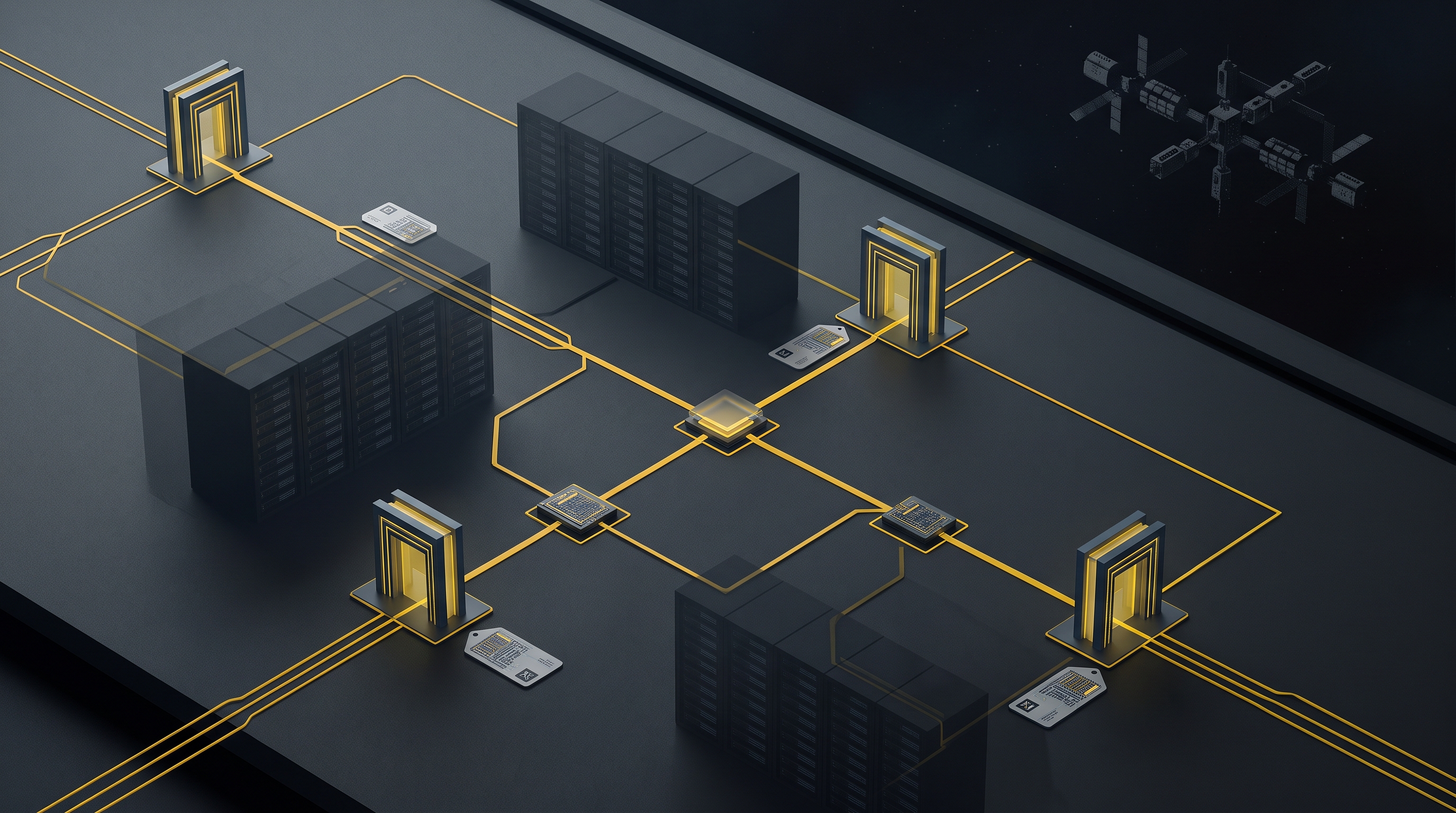
Braid diagram
The access story now has three linked parts: restriction, resale or workaround behavior, and external claims that comparable capability is emerging elsewhere.
Read sourceEthan Mollick on frontier open weights
Ethan Mollick
Mollick's post puts the business and licensing structure of frontier open-weights models next to the access debate. Licensing can become a control mechanism even when weights circulate more broadly.
Read sourceOpen weights versus closed access
Ethan Mollick
Mollick's second note keeps the open-source and closed-weight debate tied to control rather than ideology. The useful distinction is who can run the model, who can redistribute it, and who can change the terms later.
Read sourceCapacity becomes allocation
3Meta wanted Gemini capacity Google couldn't spare
Techmeme
The reported Meta-Google talks are a capacity-allocation story before they are a strategy story. If Gemini serving is constrained, internal demand and external sales start competing for the same compute.
Read sourceAlphabet leans on its TPU advantage
CNBC
CNBC frames Alphabet's tensor processing unit work as one of the company's main AI weapons. In this issue, the point is narrower: owned silicon changes the economics of who gets served first.
Read sourceOrbital data centers meet serving economics
Techmeme
The orbital-data-center argument is useful here as a contrast with near-term cost and power constraints. Today's harder operating question is still terrestrial: where inference runs, what it costs, and who gets capacity.
Read sourceCapability claims need proof
3GLM-5.2 enters the cyber comparison
Techmeme
The GLM-5.2 item keeps the access debate grounded in capability competition. The claim is consequential, but the engineering question is whether independent tests reproduce the security-bug results.
Read sourceSakana and 360 sit in the same control argument
Techmeme
This item pairs U.S. export restrictions with Chinese model competition. It belongs beside GLM-5.2 because both raise the same operator question: which controls matter if comparable capability can be sourced elsewhere?
Read sourceMarc Andreessen amplifies the GLM-5.2 comparison
Marc Andreessen
Andreessen's post is useful as a distribution signal, not as independent validation. It shows how quickly a benchmark claim becomes part of the policy and market conversation.
Read sourceOperator notes
4AI assistance moves into machine-checkable proof
Perry E. Metzger
Metzger's thread is the technical counterweight to the access and capacity news. Formalization work matters because machine-checkable proof changes where AI assistance can be trusted and where human review still has to carry the claim.
Read sourceData-center politics move into campaigns
Techmeme
The infrastructure fight now has election spending attached to it. That turns data-center permitting from a facilities issue into a local political budget line.
Read sourceArizona water cuts make the constraint local
Al Jazeera
Al Jazeera's Arizona story brings the same buildout into water allocation and municipal resistance. Pair it with the campaign-spending item, but don't turn two stories into a national rule.
Read sourceCodex users ask for sensitive-file exclusion
Hacker News / GitHub
The Codex issue is a practical security note for teams running coding agents locally. File exclusion is where agent convenience meets secret handling, repo policy, and auditability.
Read sourceCompanion episode
When Access Became an Arbitrage Business
The weekend version of the access story is less about one blocked model and more about operating surfaces: who can buy capacity, who can route around restrictions, and which capability claims survive outside testing.