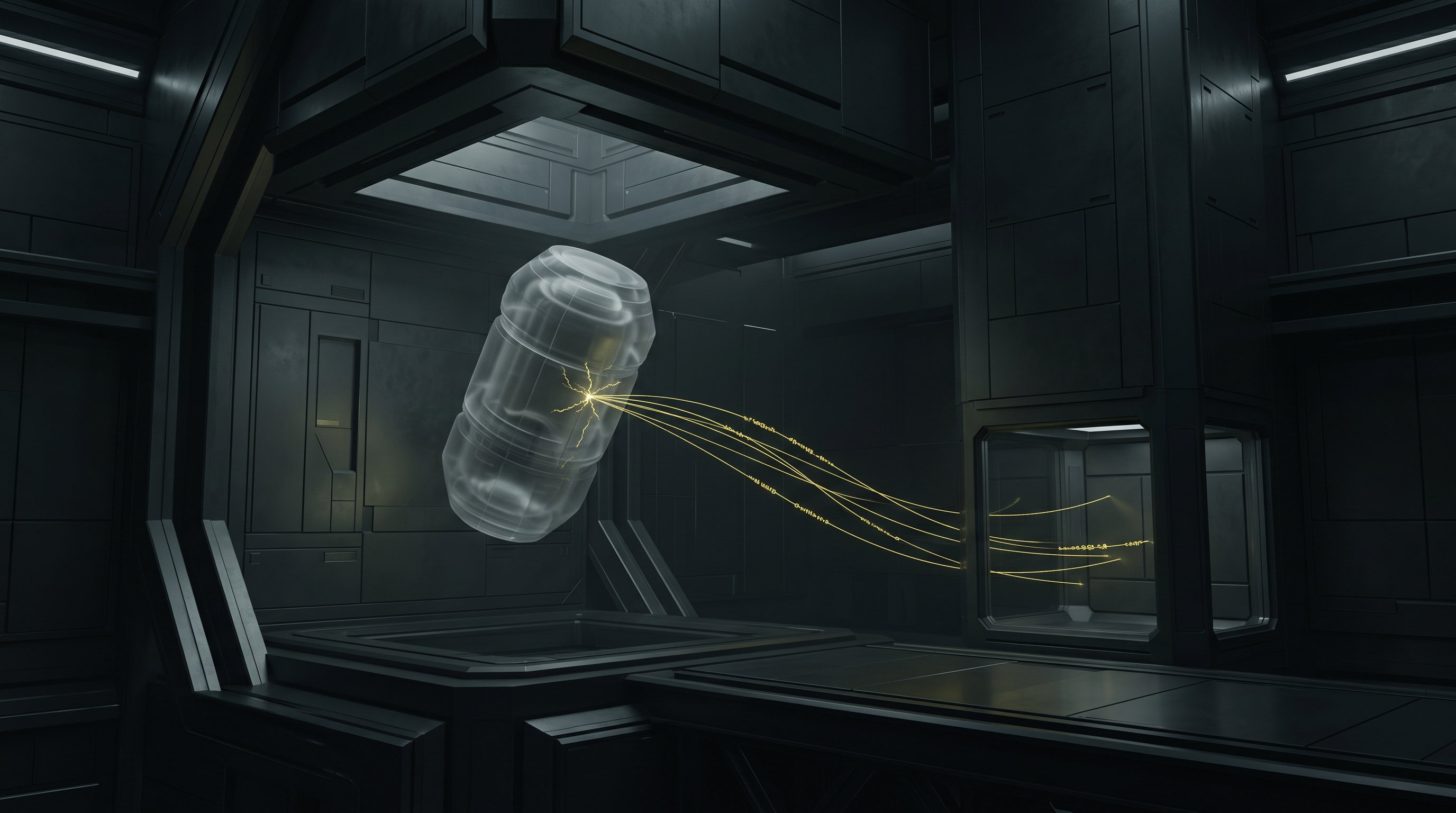
Ilia Shumailov and Alexander Panfilov found that frontier model APIs return sealed reasoning blobs that can be extracted and decoded. An attacker can replay the traces across sessions, move them into smaller models in the same family, or replace them with fabricated reasoning. Redacting the visible conversation doesn't secure the trace itself.
Read source◆ Braid Daily · 2026-08-23
Sealed reasoning blobs expose portable attack paths
Researchers found that sealed reasoning blobs can be extracted, decoded, replayed across sessions, and injected into related models.
The lead
1
Models and serving
4Claude Code users see lower effort settings
ClaudeAI community
Users reported that Claude Code's effort settings had changed. Anthropic described the behavior as a serving-configuration test, leaving open whether a permanent remapping would appear in the changelog.
Read sourceA one-week field report on Qwen 3.8 27B
LocalLLaMA community
The synthesis collects a week of practical reports on the 27 billion parameter Qwen 3.8 model, including coding and tool use, and explains how the reports were assembled. It provides a stronger baseline than isolated launch-day anecdotes.
Read sourceQwen 3.8 27B runs a 262,000-token context on one RTX 5090
LocalLLaMA community
A reproducible NVFP4 setup reports 77 tokens per second at short context on a single RTX 5090. At 128,000 tokens, throughput is 64.7 tokens per second. The write-up supplies a concrete hardware floor for local long-context work with the model.
Read sourceDFlash 2 accelerates Qwen coding prompts in a llama.cpp test build
LocalLLaMA community
Across 100 coding prompts, a three-day benchmark reports a 2.26-times speedup. Adding an n-gram drafter raises the reported speedup to 4.68 times. DFlash 2 remains a pull-request build and hasn't been merged into llama.cpp.
Read sourceControl agents with budgets
3Rate limits distinguish reversible actions from dangerous ones
AI Engineer
An agent deleted 200 workloads, affecting 20 engineers. The deletions took 90 seconds. Entropic then added an admission webhook that caps deletions per hour. The broader design budgets action volume, speed, recovery, and human oversight instead of treating every permitted action alike.
Read sourceToken budgets move from the gateway to the agent run
AI Engineer
Token Ops attributes spend to individual runs and can steer a component before stopping the workflow. In the demo, a policy reduces retrieved context from 20 chunks to five as the run approaches its budget.
Read sourceA model router cuts one coding session from $0.44 to $0.14
AI Engineer
DigitalOcean's router selected different models by task and reduced the demonstrated session cost from 44 cents to 14 cents. The reported correctness was 90% for the router and 95% for direct Opus use, within the judge's margin of error.
Read sourceState, replay, and evaluation
3Parallel agents can contaminate shared state
Vjeux on X
Vjeux identifies shared-state contamination as a reliability problem in multi-agent work. The risk moves beyond one bad tool call when another agent reads and builds on incorrect state.
Read sourceAn event log and content-addressed prompts make agent runs replayable
AI Engineer
A 15-person company built an event-driven runtime with YAML agent definitions, an append-only event log, and content-addressed prompt components. The design can reconstruct context, compare runs, and replay the same inputs with another model.
Read sourceStatic judges miss dangerous clinical-note omissions
AI Engineer
The speaker reports that about one in 20 of 847 production clinical notes contained errors serious enough to cause harm. Nearly one in five had important omissions, and more than 10% included hallucinations. The proposed judge retrieves similar expert-reviewed cases because a fixed rubric can only test rules someone already wrote down.
Read sourceCompanion episode